21 Aug 2026
How Injury Reports Alter Line Movements Across NBA Seasons
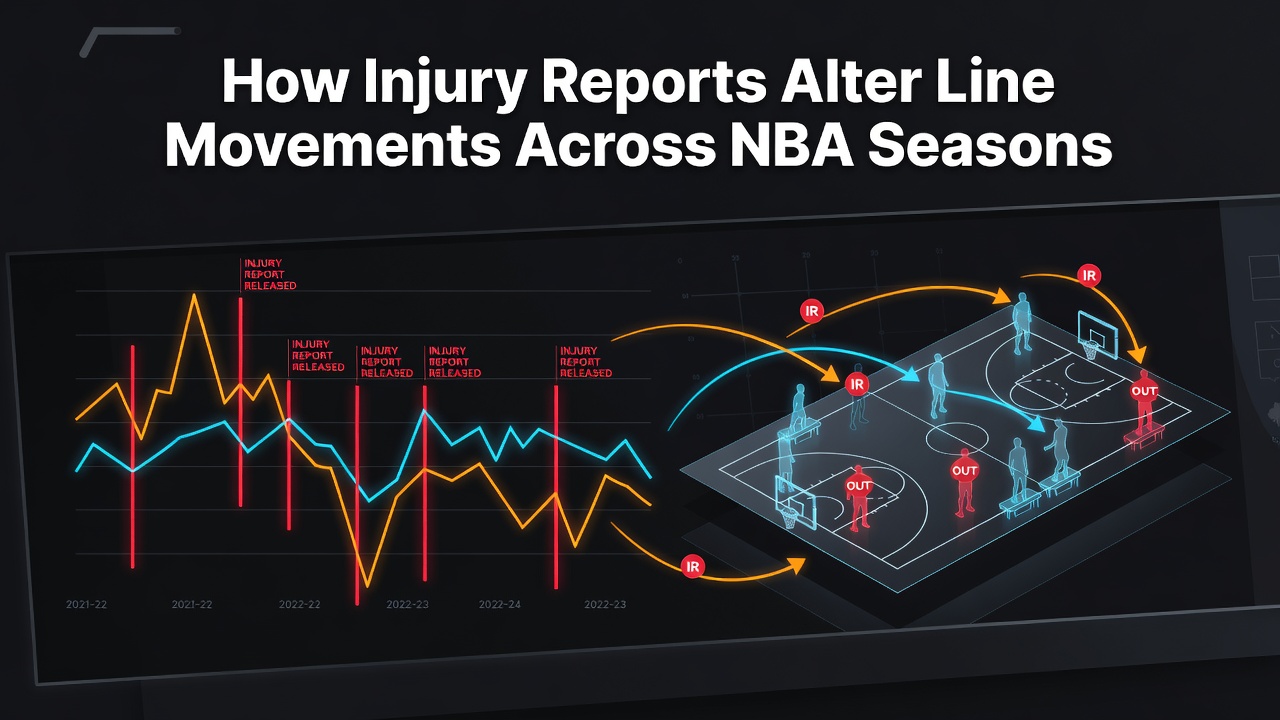
Professional sportsbooks adjust NBA betting lines when injury reports surface, and these adjustments create measurable shifts in point spreads and totals throughout each season. Data from multiple years shows that significant player absences often trigger immediate line movements of 1.5 to 4.5 points within hours of official announcements.
Teams release injury reports typically 24 to 48 hours before tipoff, while the NBA mandates updates by a set deadline each game day. Sportsbooks monitor these releases closely because star player participation directly influences team efficiency ratings and projected margins. When a high-usage guard sits out, for example, the opposing team's spread often tightens as oddsmakers recalculate expected scoring margins.
Historical Patterns in Line Shifts
Analysis of seasons from 2018 through 2025 reveals consistent responses to injury news. Point guards missing games produce larger movements than power forwards because playmaking roles affect both offense and defense more broadly. Researchers at sports analytics firms tracked over 800 games where a top-10 player sat out unexpectedly, and the average spread moved 2.8 points toward the opposing team.
Back-to-back game situations amplify these effects. A team playing the second night of a road back-to-back sees larger adjustments when its starting center is listed as questionable, since fatigue compounds the impact of missing rotation depth. Figures from the 2023-2024 season indicate that 67 percent of such games experienced at least a two-point line movement after injury designations became public.
Role of Official and Unofficial Reports
The NBA's injury reporting policy requires teams to list players as probable, questionable, doubtful, or out by 5 p.m. ET on game days. Sportsbooks incorporate this information alongside practice reports and beat writer updates that sometimes leak earlier. Early unofficial reports frequently cause preemptive line movement before the official designation arrives.
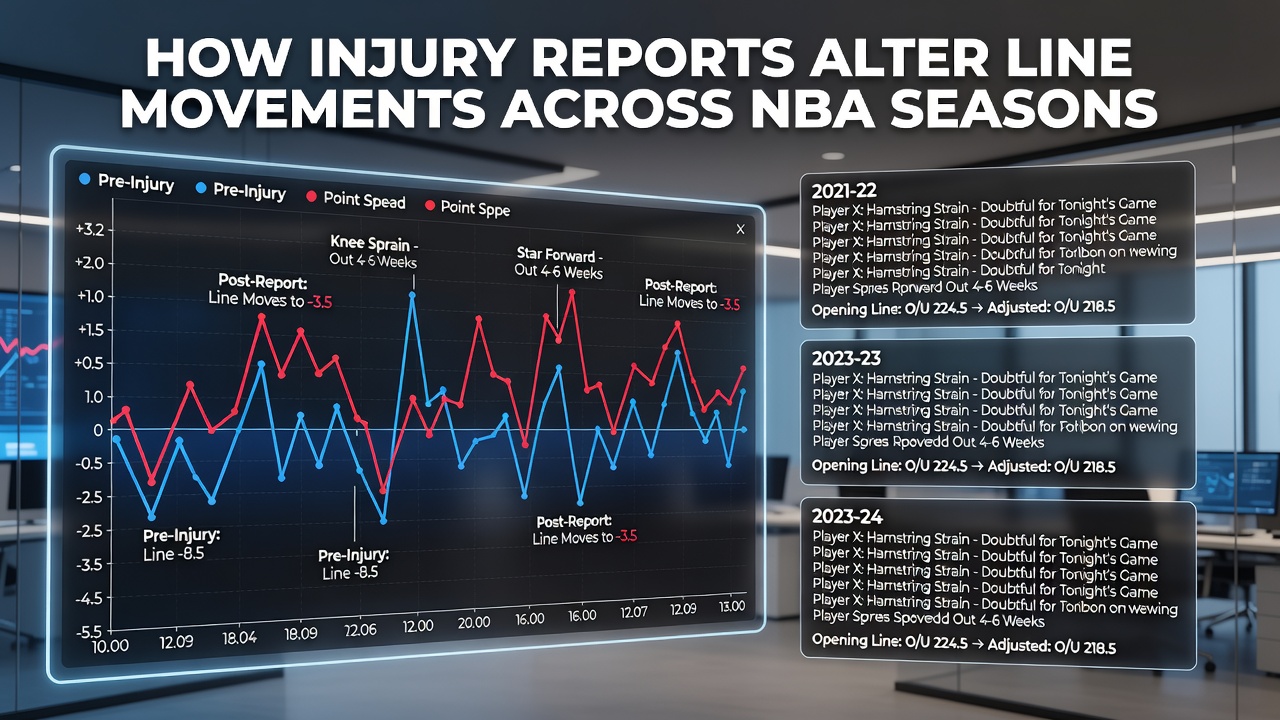
One documented case from the 2022 season involved a Western Conference contender whose star forward appeared in morning shootaround but was later ruled out. The spread shifted 3.5 points within 90 minutes of the first report, then held steady after the league-mandated update confirmed the absence. Observers note that sharp bettors often act on these early signals, which forces oddsmakers to move lines quickly to balance action.
Seasonal Variations and 2026 Outlook
Playoff races and load management create distinct patterns later in seasons. Teams resting players during March and April produce more line volatility because the motivation behind absences is harder to quantify than season-ending injuries. Data compiled through the end of the 2025 campaign shows that games after the All-Star break experienced 22 percent larger average movements following injury reports compared with October and November contests.
As of August 2026, early indicators from training camp suggest similar dynamics will continue. League-wide emphasis on player health monitoring has increased the frequency of minute restrictions, which in turn affects totals betting more than spreads. A report from the American Gaming Association highlights that totals lines move an average of 4.2 points when two rotation players are ruled out on the same team.
Betting Market Responses
Sharp bettors and syndicates focus on injury timing because the market incorporates information at different speeds across books. Offshore operators sometimes adjust slower than major U.S. sportsbooks, creating brief arbitrage windows. Yet the overall effect across the market is rapid convergence once multiple sources confirm an absence.
Public bettors tend to overreact to star injuries while underestimating depth chart changes. Studies from university research groups show that lines often settle at efficient levels within four hours of official reports, leaving limited value for late bettors. This efficiency holds across both regular season and postseason games, though playoff injury news can produce larger initial swings due to higher stakes.
Conclusion
Injury reports remain one of the primary drivers of NBA line movement each season. Official designations, combined with earlier unofficial signals, trigger adjustments that reflect updated win probabilities and scoring projections. Patterns observed from 2018 onward demonstrate that these movements vary by position, game context, and time of year, while market responses continue to evolve with improved data availability. As the 2026-2027 season approaches, the same mechanisms are expected to shape betting markets in comparable ways.