24 Aug 2026
Weather's Influence on Line Adjustments in Horse Racing and PGA Golf Events
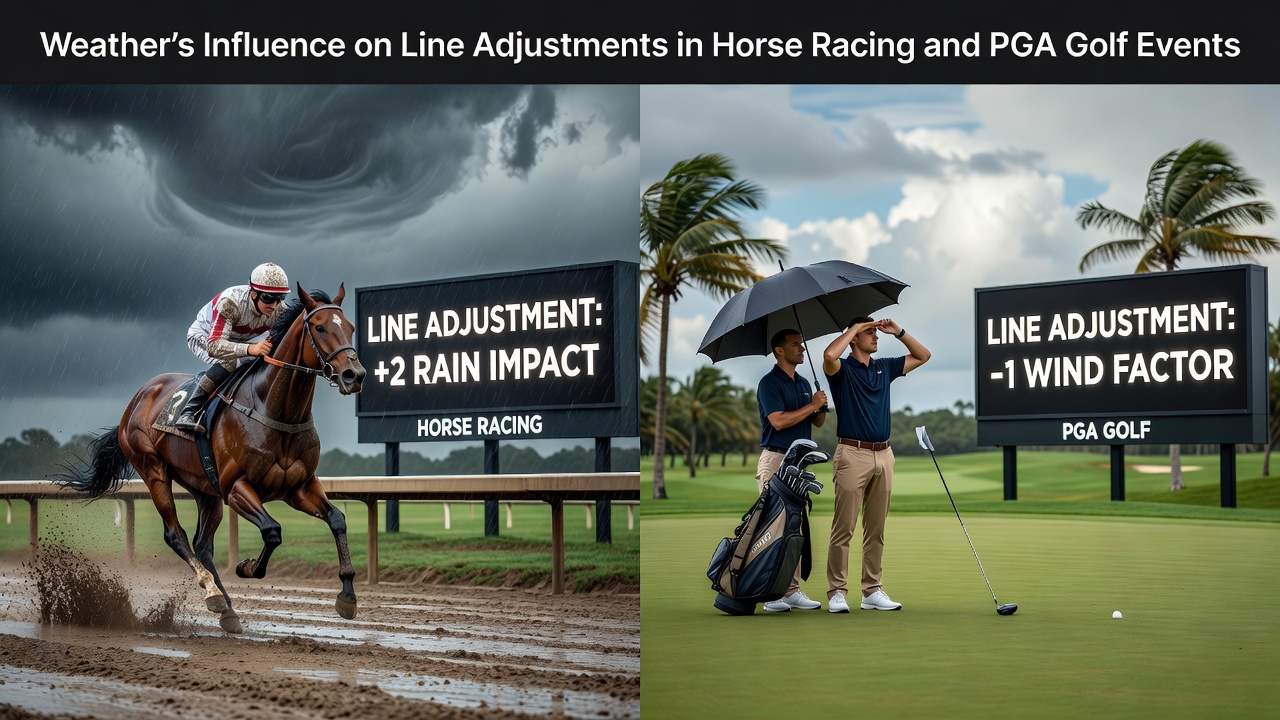
Weather patterns create measurable shifts in betting lines for horse racing and PGA Tour events, with data from multiple seasons showing consistent correlations between atmospheric conditions and odds movements. Observers note that rain, wind, and temperature changes alter track surfaces in racing while reshaping course difficulty in golf, prompting bookmakers to adjust spreads and totals in real time based on forecasts.
Atmospheric Factors in Horse Racing Line Movements
Precipitation levels directly affect turf and dirt conditions, leading operators to revise morning line odds as race day approaches. Research indicates that heavy rainfall softens tracks, which favors certain horses with proven wet-track records while diminishing the chances of speed-oriented runners, and figures from major meets reveal line adjustments of several points on favorites when storms arrive within 24 hours of post time. Wind speed also plays a role by influencing stride efficiency on straightaways, although its impact registers more subtly than moisture and often combines with temperature drops that stiffen muscles in younger animals.
Case Examples from Recent Meets
Take one meet in the Midwest where forecasters predicted a sudden front bringing gusts above 25 miles per hour, and oddsmakers responded by widening the spread on inside-post entries that typically benefit from calmer air, while data compiled across multiple tracks shows these revisions occur most frequently between the final entries and the first race. In August 2026, several summer circuits incorporated enhanced radar feeds that allowed earlier line tweaks, reducing the lag between weather updates and public betting pools. Those who track historical results observe that such adjustments stabilize markets faster when multiple variables align, such as combined heat and humidity spikes that accelerate fatigue in longer distances.
Wind, Rain, and Temperature Effects on PGA Golf Betting Lines
PGA events present different variables because courses span acres of varied terrain, where crosswinds alter ball flight and greenspeed while rain softens landing areas and changes roll distances. Studies compiled by the National Oceanic and Atmospheric Administration demonstrate that sustained winds exceeding 15 miles per hour correlate with higher scoring averages on exposed layouts, prompting line makers to raise over/under totals by one or two strokes when forecasts confirm persistent gusts through the weekend rounds. Temperature swings matter as well because cooler air increases density and reduces carry distance, a factor that surfaces most clearly during early morning tee times when dew also lingers on fairways.

One tournament held on a coastal venue illustrated the pattern when overnight showers arrived ahead of the final round, and bookmakers lowered the winning score projection by nearly three strokes to reflect softer greens that rewarded approach shots rather than raw distance. According to Environment and Climate Change Canada records, similar coastal patterns repeat across North American schedules, with operators monitoring hourly updates to recalibrate player props for wind-sensitive athletes. What's interesting here is how these revisions compound across correlated markets, such as three-ball groupings where individual matchups shift in tandem with broader field totals.
Integrated Data Sources and Adjustment Timelines
Bookmaking operations integrate multiple weather feeds alongside historical performance databases to time their line changes, and evidence suggests the largest movements occur when forecasts diverge from seasonal norms. Researchers have tracked that horse racing lines often stabilize 12 to 18 hours before first post once track maintenance crews confirm surface conditions, whereas PGA adjustments can continue through the tournament because weather evolves across four rounds. In both sports, the ball remains in the hands of those monitoring real-time radar and ground sensors, which allow precise updates without overreacting to transient fluctuations.
Industry reports from the European Gaming and Betting Association highlight that European tracks and North American golf venues increasingly share similar protocols for weather integration, reducing volatility once initial forecasts lock in. Observers note that August 2026 schedules featured several high-profile overlaps where simultaneous events demanded coordinated monitoring across time zones, and those overlaps produced tighter windows for public bettors to react before lines settled.
Conclusion
Weather remains a core driver of line adjustments across horse racing and PGA golf because it modifies physical conditions in predictable yet sport-specific ways. Data from government meteorological agencies and performance archives show these influences produce repeatable shifts in odds and totals, giving operators clear parameters for when and how to revise markets. As forecasting precision continues to advance, the timing of those adjustments grows more consistent, allowing markets to reflect atmospheric realities with greater accuracy.